
Geopolitical Tensions; Economic Challenges; Diplomatic Efforts; Talent Development; Media Narratives
Seismic Activity on the US-Canada Border: A Comparative Analysis of Media Narratives
Recent events show a significant earthquake occurring along the US-Canada border near Alaska and Yukon. Sina reports that the earthquake, measuring 6.9 on the Richter scale, struck Alaska with significant tremors felt in nearby areas. The article highlights the lack of immediate reports of casualties or damage, emphasizing the measured response from the US Geological Survey which did not issue a tsunami warning.
The Liberty Times provides a slightly different angle, reporting the quake as a 7.0 magnitude event. It underscores the remoteness of the affected area, suggesting minimal impact on human populations due to the sparse settlement in the region. The narrative here seems to focus on the scientific aspects, citing experts like Alison Bird who noted the absence of structural damage despite objects falling from shelves.
Meanwhile, World Journal corroborates the details about the earthquake's depth and location, reiterating the lack of a tsunami warning and minimal immediate damage reports. The publication appears to maintain a neutral tone, focusing on factual reporting without delving into speculative impacts.
These developments indicate a consistent narrative across different media, with varying emphases on the scientific, human, and geographic aspects of the event. While Sina focuses on immediate seismic data and the official response, Liberty Times delves into the implications for the local population and infrastructure. World Journal, in contrast, maintains a balanced account, echoing the factual elements reported by both other sources.
Japan's Political and Economic Challenges Amid Taiwan Comments
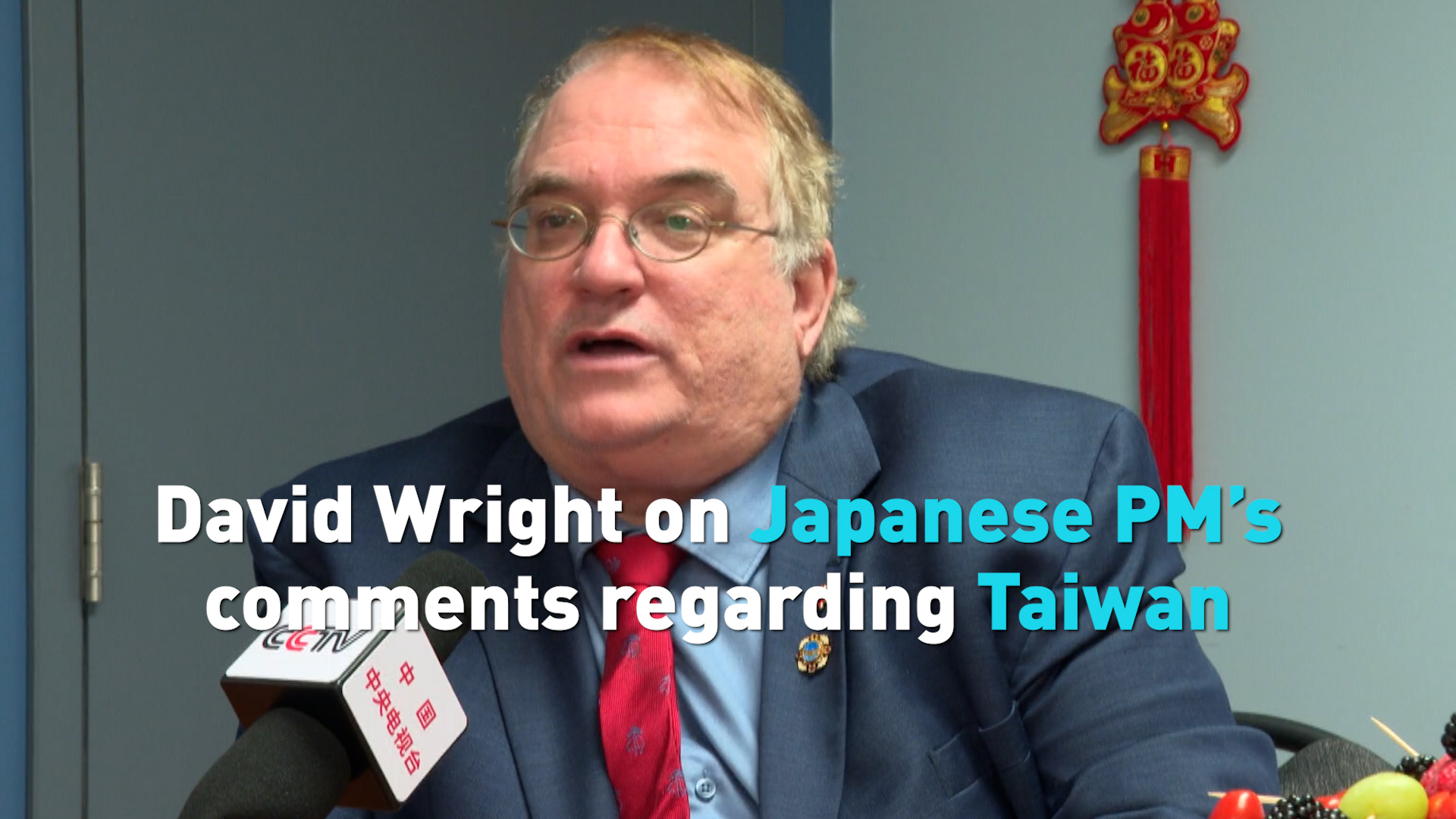
Recent events show a significant uproar following Japanese Prime Minister Sanae Takaichi's remarks on Taiwan. CGTN highlights China's strong response, accusing Takaichi of meddling in China's internal affairs, potentially destabilizing the Taiwan Strait. This perspective underscores China's sensitivity to foreign comments on Taiwan, emphasizing its view of Taiwan as a core national interest.
Meanwhile, Sina reports on a former Tokyo official urging Takaichi to retract her statements, warning that Chinese pressure will persist unless she does. The article suggests skepticism about U.S. intervention to support Japan, reflecting a belief in Japan's need for independent crisis management systems. This narrative portrays Takaichi's comments as diplomatically risky, hinting at potential regional tensions.
In a different vein, Tencent focuses on Japan's domestic economic struggles under Takaichi's administration. The article criticizes her economic policies, such as the massive fiscal stimulus, which are perceived as exacerbating public discontent and economic instability. This narrative highlights the internal challenges Takaichi faces, portraying her as a "workaholic" leader struggling to stabilize Japan's economy amid rising living costs and market volatility.
These developments indicate a complex interplay of international diplomacy and domestic policy challenges for Japan. While CGTN and Sina focus on the geopolitical ramifications of Takaichi's Taiwan comments, Tencent shifts the lens to her economic management, suggesting that her leadership is under pressure both at home and abroad.
Ukrainian President's Diplomatic Efforts with the U.S. Amidst Escalating Tensions
Recent events show an ongoing diplomatic effort between Ukraine and the United States, as highlighted by two distinct news sources. According to CCTV, Ukrainian President Volodymyr Zelensky engaged in a detailed and extensive phone conversation with U.S. officials, including Ambassador Steve Witkoff and U.S. Presidential Advisor Jared Kushner. The discussions focused on ensuring an end to current hostilities, establishing a long-term security framework, and monitoring Russia's compliance with obligations. Zelensky emphasized the importance of practical and feasible proposals for peace and security.
Meanwhile, World Journal reports that the talks concluded without any significant breakthroughs, despite ongoing Russian attacks using drones and missiles on Ukrainian infrastructure. Zelensky remains committed to pursuing "genuine peace" through continued negotiations. The report also mentions a planned meeting in London involving French President Emmanuel Macron and other European leaders, aiming to evaluate U.S.-proposed solutions to end the prolonged conflict.
The news highlights a contrast in narrative focus: CCTV underscores Ukraine's determination for sustainable peace through collaboration with the U.S., while World Journal emphasizes the lack of immediate progress and the continued impact of Russian aggression. These developments indicate a complex geopolitical landscape where diplomatic efforts are persistently pursued amidst escalating tensions.
Hong Kong's Eighth Legislative Council Election: A Harmonized Narrative Across Chinese Media
The recent coverage of Hong Kong's eighth-term Legislative Council (LegCo) election by Chinese state media outlets illustrates a consistent narrative focused on the orderly conduct and strategic significance of the election process.
CCTV succinctly reports the commencement of voting, emphasizing the procedural aspect of the election, with a brief mention of the date and the start time. The article appears to focus primarily on the logistical aspects of the election, underscoring the efficiency and organization of the process.
Meanwhile, CGTN provides a more detailed account of the election, highlighting the structure and inclusivity of the voting process. The article mentions the "patriots administering Hong Kong" principle underpinning the election, with specific details on the distribution of the 90 seats among different constituencies. This narrative aligns with the central government's emphasis on maintaining stability and control, suggesting an intention to reassure both domestic and international audiences of the election's legitimacy and fairness.
CGTN also underscores efforts made to facilitate voting for diverse groups, including civil servants, healthcare workers, and ethnic minorities, as well as those affected by a recent fire. This highlights the government's commitment to ensuring broad participation and addressing community needs, possibly aiming to project an image of resilience and unity in the face of adversity.
The coverage by both outlets reflects a concerted effort to portray the election as a successful exercise in governance, with Chief Executive John Lee's call for active voter participation further reinforcing the narrative of civic duty and collective progress. Lee's comments on the election's role in driving reforms and enhancing public safety underscore the strategic importance attributed to this electoral process in shaping Hong Kong's future.
Contrasting Reports on Southwest Algeria Traffic Accident
Recent events show a tragic traffic accident occurred in the southwestern region of Algeria, with varying reports on the casualties. CCTV reports that the accident resulted in 14 deaths and 34 injuries when a bus veered off the road and overturned. This coverage highlights the severity of the incident with a focus on the high number of casualties. Meanwhile, Sina provides a different account, stating that the accident caused 9 deaths and 10 injuries. This discrepancy in numbers indicates either a difference in reporting times or sources, showing how varying narratives can emerge around the same event. Both sources note that local civil defense departments are involved, with investigations ongoing to determine the cause of the accident. These developments indicate a need for further clarity as the situation unfolds. The news highlights the challenges of reporting in real-time, especially in remote areas, and the potential for differing accounts to emerge from such incidents.
The Dutch Dilemma: Semiconductor Seizure and Its Repercussions
Recent events show the Dutch government's unexpected and controversial decision to seize control of the Chinese semiconductor company, Anshi Semiconductor, a subsidiary of Wingtech Technology. Tencent News reports that the move, justified under the guise of 'national security', has sparked significant backlash within the European business community and led to a diplomatic standoff with China. The Dutch Minister of Economic Affairs, Kaag, admitted to being caught off guard by China's retaliatory export restrictions, which halted the flow of chips. This response underscores the heavy costs of such unilateral actions.
Meanwhile, another article on Tencent News highlights that the Dutch government's actions were not as spontaneous as they seemed. The strategic misjudgment stemmed from underestimating China's resolve to protect its legal rights and interests. The article suggests that the Dutch government’s actions were influenced by geopolitical considerations and an alignment with U.S. strategies to contain China's semiconductor industry. This narrative points to a deeper entanglement of commercial regulations and geopolitical maneuvering.
These developments indicate that the Dutch government’s strategic oversight has led to significant economic and diplomatic repercussions. The semiconductor supply chain disruption has had immediate effects on the European automotive industry, forcing a reevaluation of dependency on Chinese manufacturing capabilities. This situation illustrates the broader implications of geopolitical tensions on global supply chains and the risks of unilateral economic policies.
The news highlights a fundamental clash between commercial rules and geopolitical ambitions, with the Dutch government’s actions reflecting a broader trend of economic nationalism. It appears that the Dutch government may have miscalculated the impact of its actions, both economically and diplomatically, as it navigates the complex interplay of national security and international commerce.
Talent Development and Industrial Needs in China
Recent events show a concerted effort in China to align educational and employment opportunities with the evolving needs of its industries. The CCTV report highlights the second China (Hainan) Talent Exchange Conference, which offered nearly 10,000 job positions across key sectors such as tourism, modern services, and high-tech industries. This event underscores Hainan's strategy to attract diverse talent and foster innovation by integrating talent chains with technological advancements. As of November, Hainan has already met its goal of recruiting 1.03 million talents, ahead of schedule, indicating a strong focus on building an appealing policy environment for talent integration.
Meanwhile, Sina's article draws attention to Jiangsu's expansion in vocational education, with the approval of new bachelor-level vocational colleges. This move is tailored to meet industrial demands by enhancing the quality of talent development. For instance, Wuxi Vocational Institute of Technology is focusing on intelligent manufacturing and robotics, aligning its programs with Jiangsu's '1650' industrial system and Wuxi's '465' modern industrial cluster. The emphasis is on creating a seamless integration of academia and industry, reinforcing the notion that educational institutions are pivotal in nurturing a workforce that is ready for high-tech and advanced manufacturing roles.
These developments indicate that both Hainan and Jiangsu are pioneering models of talent acquisition and vocational training that directly respond to regional industrial needs. While CCTV focuses on the broader ambition of transforming Hainan into a talent magnet, Sina zeroes in on the educational strategies in Jiangsu, emphasizing the importance of curriculum aligned with industrial demands. Together, these narratives highlight a national trend towards strategic alignment of education and industry, underpinned by a clear understanding of local and regional economic goals.
G7's Stance on China: A Multifaceted European Engagement
Recent events show a notable shift in the attitude of major European countries towards China, as highlighted by the G7's recent diplomatic maneuvers. According to Tencent News, the G7 has presented three explicit 'no-go' areas to China: no assisting Russia, no changing the status quo in the Taiwan Strait through force, and no restricting the export of rare earths. This move appears to be a strategic attempt to influence China's policies by setting clear boundaries.
The article from Tencent suggests that these developments indicate a growing concern among European nations about their economic dependencies on China, particularly in terms of raw materials and manufacturing. It highlights Germany's proactive approach, with Vice Chancellor and Finance Minister visiting China to pave the way for future dialogues. France, on the other hand, aims to strengthen economic cooperation while addressing broader geopolitical issues like the Russia-Ukraine conflict.
It appears that the news highlights the dual nature of Europe's engagement with China. On one hand, there is a reliance on Chinese goods due to their competitive pricing and large production volumes. On the other hand, there is a sense of unease and a desire to rebuild European manufacturing capabilities, which is complicated by internal disagreements and varied national interests.
The article also notes that the UK's position is somewhat ambivalent, characterized by a desire to maintain economic ties while addressing security concerns. This dual approach reflects a broader European sentiment that seeks to balance economic interests with strategic caution.
These developments underscore a significant shift in Europe's approach to China, driven by both internal and external pressures. The narrative presented by Tencent suggests that while European countries recognize the importance of their relationship with China, they remain wary and are attempting to navigate this complex dynamic with a mix of engagement and caution.