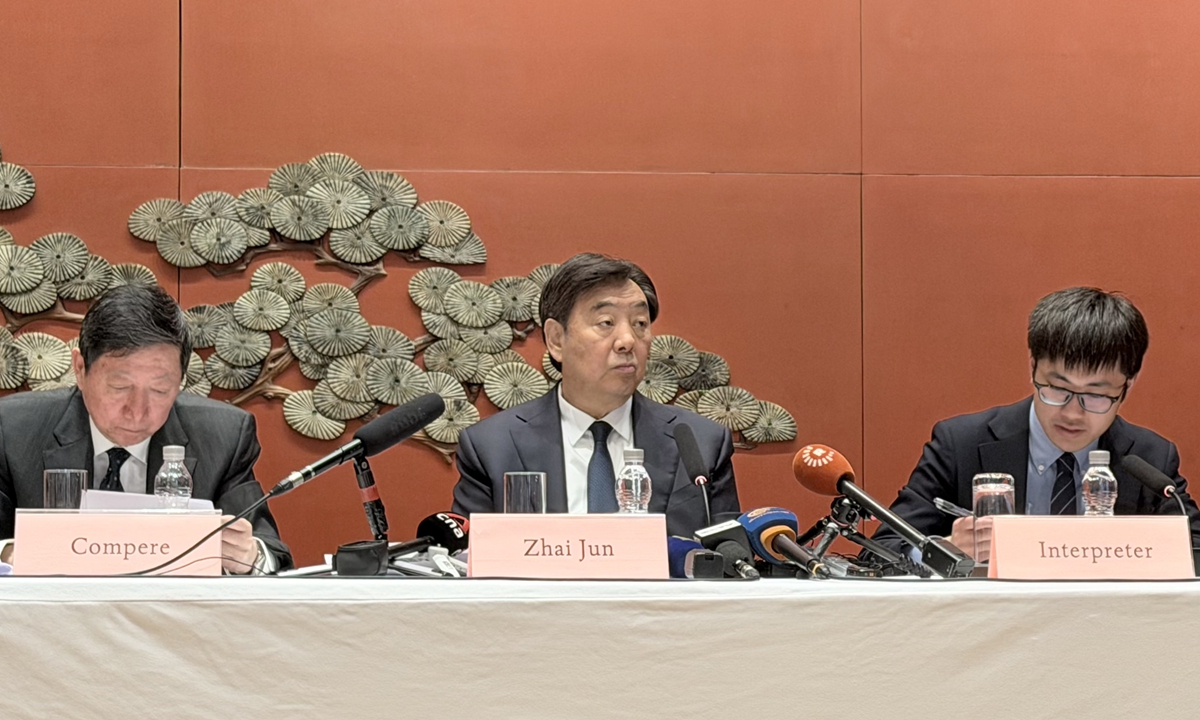
Japan-China Diplomatic Tensions; Middle East Military Escalations; China's Open-Source Chip Breakthroughs
Japan-China Diplomatic Incident and Its Broad Implications for Global Stability
Recent tensions between Japan and China have been underscored by a provocative incident involving a Japanese Self-Defense Force (SDF) officer forcibly entering the Chinese Embassy in Japan. This incident, reported by multiple Chinese outlets, highlights the delicate balance of diplomatic relations in East Asia and carries significant implications for global markets and international policy.
Xinhua News reported the Japanese Defense Minister expressing "deep regret" over the incident, emphasizing adherence to law and order. This statement appears to downplay the severity of the event, potentially aiming to mitigate diplomatic fallout. The international community, particularly investors and policymakers in the US and EU, should note this language as indicative of Japan's cautious approach to handling military-related crises.
In contrast, Sina News adopts a more critical stance, questioning Japan's internal handling of extremist ideologies within its military ranks. The article suggests systemic issues, including a rise in right-wing nationalism, which could destabilize regional security and affect international relations. For global businesses, this points to potential risks in Japanese markets if nationalist sentiments influence economic policies.
Another perspective from China News Network emphasizes the growing anti-China sentiment in Japan, which it attributes to government policies. This narrative could impact foreign policy professionals' views on Japan's role in regional security frameworks, affecting strategic calculations for US and EU alliances in Asia.
Tencent News expands the discussion by highlighting Japan's broader geopolitical maneuvers, including military reorganization and historical disputes. This analysis suggests that Japan's actions might provoke collective regional responses, potentially complicating US strategic interests in Asia-Pacific.
Lastly, Qiushi Journal provides a broader strategic context, framing China's steady development and international cooperation as stabilizing forces in a volatile global environment. This perspective underscores China's narrative of being a "stabilizing anchor" amid rising tensions, which could influence international investors' confidence in China's market stability.
Overall, this incident and its surrounding narratives serve as a microcosm of the complex interplay between historical grievances, national identity, and strategic interests in East Asia. For international readers, understanding these dynamics is crucial for navigating the geopolitical landscape that affects global supply chains, market stability, and diplomatic engagements.
Escalating Tensions in the Middle East: Israel-Iran Confrontations and US Military Considerations
Recent reports from multiple sources highlight a significant escalation in tensions involving Israel, Iran, and the United States, with potential global repercussions. CCTV reports on Israel's claim of a large-scale military strike against Iranian installations in Dehloran, emphasizing the strategic pressure Israel faces. This narrative underscores Israel's proactive military stance, likely intended to deter Iranian influence in the region. Such moves are crucial as they potentially disrupt regional stability, affecting global oil prices and international security policies.
Meanwhile, Sina provides additional details on Iran's response, stating that Iran has mobilized over a million personnel in preparation for ground conflict with the United States. This indicates a high level of military readiness and signals Iran's intent to counteract perceived threats. The mobilization could lead to heightened military expenditures and influence investor confidence in Middle Eastern markets.
The CCTV article also discusses potential U.S. military deployments to the Middle East, considering sending 10,000 troops to reinforce its presence. This move by the Pentagon aims to provide more military options amidst ongoing peace talks. The deployment of such forces could have strategic implications, potentially altering U.S. defense commitments in other regions, such as the Indo-Pacific, and impacting NATO's strategic calculations.
Furthermore, Sina highlights that Iran has launched the "True Promise-4" military operation targeting Israeli military bases, using precision-guided missiles and drones. This development showcases Iran's technological capabilities and willingness to engage in direct conflict, possibly leading to further sanctions and impacting international diplomatic efforts to stabilize the region.
These developments are crucial for international readers as they influence global energy security, with potential spikes in oil prices affecting economies worldwide. Additionally, the geopolitical shifts could lead to realignments in international alliances and defense strategies, particularly affecting U.S. and EU policies towards the Middle East.
Lost Humanitarian Ships Bound for Cuba Highlight Global Maritime and Diplomatic Challenges
Recent reports from Xinhua and Sina detail the disappearance of two humanitarian aid ships en route to Cuba. These vessels, carrying humanitarian supplies, went missing in the Caribbean Sea, prompting a multi-nation search and rescue operation. The Mexican Navy initiated the search, coordinating with maritime rescue centers from Poland, France, Cuba, and the United States. This incident underscores the intricate web of international cooperation required in maritime emergencies, highlighting the importance of global maritime security frameworks.
The vessels, which departed from Mexico on March 20th, were expected to arrive in Havana by March 24th-25th. However, communication was lost as they traversed the Caribbean waters. This situation raises significant concerns for international shipping routes and the safety protocols that govern them. For global markets, the incident may prompt a reevaluation of maritime insurance and risk assessments, potentially affecting shipping costs and logistics planning.
The involvement of multiple countries in the search effort demonstrates the broader strategic importance of the Caribbean as a crossroads for international shipping and diplomacy. For the U.S. and EU, ensuring safe passage in these waters is critical not only for humanitarian missions but also for commercial interests. The incident may influence future policy discussions on maritime safety and international cooperation in emergency response.
Both Xinhua and Sina emphasize the humanitarian nature of the mission, which serves as a reminder of the ongoing need for international aid and cooperation in addressing global challenges. The loss of these ships is not just a maritime incident but also a diplomatic concern, as it involves multiple nations and highlights the vulnerabilities in ensuring the safe delivery of aid. For international audiences, this development is a call to action for strengthening global maritime governance and enhancing collaborative efforts in humanitarian logistics.
China's RISC-V Initiative: A Strategic Leap in Open-Source Chip Development and Its Global Implications
Recent developments highlight China's strategic push into the realm of open-source chip technology with its significant advancements in RISC-V architecture. On March 26, at the Zhongguancun Forum's RISC-V Ecosystem Technology Forum, the Chinese Academy of Sciences unveiled its breakthroughs in RISC-V key technologies. They announced the launch of the 'Xiangshan' open-source processor and the 'Ruyi' native operating system, marking a pivotal step in developing the next generation of chips and operating systems.
The RISC-V architecture, a globally open and license-free chip framework, is positioned as a universal standard in the semiconductor industry. This initiative allows for autonomous modification without patent fees, making it a crucial route for China to enhance its chip ecosystem and develop controllable computing power. The performance of the 'Xiangshan' processor has reached international advanced levels, and it has been integrated with the world's first open-source chip internet protocol, establishing it as a leading open-source high-performance RISC-V processor system.
Globally, this move could significantly impact international markets and businesses by reducing development costs and fostering innovation. For investors, the commercialization of high-performance open-source chips presents new opportunities in the tech sector. For the US and EU, this development could necessitate a reevaluation of their semiconductor strategies, potentially accelerating their own open-source initiatives to maintain competitiveness.
The broader strategic implications are profound. As China advances its open-source chip capabilities, it strengthens its position in the global tech race, challenging existing semiconductor giants. This could lead to shifts in supply chains, with more countries exploring open-source solutions to reduce dependency on proprietary technologies.
While the second article from Xinhua provides a quick overview of China's scientific advancements up to 2025, it adds little to the specific narrative of RISC-V developments and is therefore only briefly mentioned here. Overall, China's RISC-V initiative is a clear signal of its intent to lead in open-source technology, with significant ramifications for global tech competition and policy frameworks.
For more details, you can read the full articles on Xinhua and the brief overview on Xinhua.
China's Zhongguancun Forum Highlights AI and Robotics Innovations with Global Implications
The recent Zhongguancun Forum in Beijing showcased some of the latest innovations in artificial intelligence and robotics, underscoring China's growing influence in the tech industry. The event, held from March 25 to 29, 2026, under the theme of 'Technological and Industrial Innovation Deep Integration,' featured cutting-edge demonstrations that highlight China's ambitions to lead in the AI sector.
According to Xinhua, the forum revealed robots capable of performing intricate tasks such as playing the piano and managing logistics, illustrating the sophistication of China's AI capabilities. Such advancements could significantly impact global supply chains and logistics management, offering more efficient solutions and potentially reducing operational costs for international businesses.
Another report from Xinhua highlighted a humanoid robot, similar to those featured in the popular 'Spring Gala,' capable of performing delicate operations like forming hearts with its hands. This development not only showcases China's prowess in robotics but also its potential to influence cultural and social spheres globally.
These advancements are particularly relevant for international markets and investors. As China pushes the boundaries of AI and robotics, companies worldwide may need to adjust their strategies to remain competitive. For instance, firms in the EU and US might need to accelerate their technology adoption or collaborate with Chinese tech firms to leverage these innovations.
On a policy level, the US and EU could face increased pressure to enhance their own AI strategies to maintain a competitive edge. This could lead to more investment in AI research and development, as well as potential collaborations or tensions regarding technology regulation and intellectual property.
Overall, the forum's focus on integrating technology and industry reflects a strategic move by China to solidify its position as a global tech leader. For international readers, understanding these developments is crucial, as they will likely influence global tech competition, economic strategies, and policy decisions in the coming years.
EU's E-commerce Sanctions on Chinese Platforms and the Global Implications of G7 Exclusions
The European Union's recent decision to impose penalties on online platforms selling 'unsafe products' imported from China, as reported by Liberty Times, marks a significant move in international trade regulation. The EU has reached a temporary agreement to reform customs systems, particularly targeting Chinese e-commerce giants like Shein and Temu. These platforms have rapidly grown by directly shipping low-cost packages from China to European consumers. The reform, which could introduce fines up to 6% of a company's sales in the EU, aims to ensure product safety and compliance with EU regulations. This move signals a stricter stance on product standards and could impact international businesses reliant on Chinese imports, potentially driving up costs and affecting supply chains globally. For international markets, this could mean a shift in competitive dynamics, as businesses may need to adapt to new compliance costs and timelines.
Meanwhile, Tencent News covers the geopolitical tensions surrounding the upcoming G7 summit in France, highlighting the exclusion of China from this significant global forum. French officials have confirmed that China will not attend and have instead invited countries like India and Kenya, aiming to diversify the dialogue. The exclusion underscores the ongoing strategic decoupling and the West's attempt to counterbalance China's global influence. This development is crucial for international observers as it reflects the shifting alliances and the potential for increased geopolitical fragmentation. The G7's focus on reducing dependency on Chinese exports and enhancing local production could lead to significant changes in global trade patterns, affecting everything from raw material sourcing to manufacturing strategies worldwide.
These parallel stories illustrate the broader strategic and economic implications of the West's recalibration in dealing with China. For U.S. and EU policymakers, these developments underscore the need for coherent strategies that address both trade and geopolitical challenges. Investors and businesses should closely monitor these regulatory changes and geopolitical realignments, as they could have long-lasting impacts on global supply chains, market access, and international economic policies.
China's Drive to Cultivate Technology Managers: Implications for Global Innovation
Recent developments in China's technology sector highlight a strategic push to professionalize and scale the role of technology managers, as emphasized during the 2026 Zhongguancun Forum. This initiative is seen as crucial to bridging the gap between '0 to 1' and '1 to 10' in technology commercialization, a challenge that has long impeded the transformation of scientific research into market-ready products.
The Xinhua article outlines the increasing recognition across government, universities, and research institutions of the need for specialized technology managers. These individuals are tasked with identifying viable innovations from the vast pool of research outputs and facilitating their transition into industry applications. Liu Qing from the National Technology Innovation Center stresses that a professional cadre of technology managers is indispensable in overcoming the 'valley of death' that often stymies innovation.
The implications for international markets and businesses are significant. As China builds a robust framework for technology transfer, global investors and companies might find new opportunities to collaborate with Chinese firms, potentially gaining access to a wealth of innovations emerging from China's research institutions. This could lead to increased competitiveness in sectors such as biotech and AI, where China is rapidly advancing.
For policymakers in the US and EU, China's strategy presents both challenges and opportunities. On one hand, it may intensify competition, necessitating policy adjustments to foster similar ecosystems for innovation in their regions. On the other hand, it opens avenues for cross-border partnerships and joint ventures that could enhance technological development globally.
For international readers, understanding China's focus on technology management is crucial. It not only affects the dynamics of global tech competition but also influences the strategic decisions of multinational corporations seeking to engage with China's burgeoning innovation landscape. The broader implications suggest a shift towards a more integrated global innovation ecosystem, with China playing a pivotal role in shaping its future trajectory.