Leadership Shifts and Strategic Moves: US Navy, Iran Tensions, and China's Global Ambitions Reshape International Dynamics
Leadership Shakeup in the US Navy: Global Implications of the Sudden Departure of Secretary John Phelan
The recent sudden resignation of US Navy Secretary John Phelan has captured significant attention globally, reflecting the intricate interplay between domestic developments within the United States and their broader international ramifications. This leadership change, coming amid tense geopolitical climates and ongoing military engagements, is reported by several media outlets, each offering unique perspectives on the situation.
Liberty Times focuses on the appointment of Hung Cao, a Vietnamese-American and former Navy officer, as the acting Navy Secretary. Cao's background as a refugee and his subsequent rise in the US military has sparked discussions among Taiwanese netizens, highlighting his symbolic significance as a representation of American diversity and resilience. This narrative underscores the soft power of the US in promoting inclusivity, which is crucial in maintaining its alliances in the Asia-Pacific region.
Xinhua and CCTV, both Chinese state-run outlets, emphasize the abrupt nature of Phelan's departure and its timing during President Trump's second term, hinting at potential instability within the US military leadership. This portrayal aligns with China's strategic narrative that questions the reliability of US military commitments, potentially influencing regional actors' trust in US security guarantees.
Sina adds context about the broader strategic environment, noting the US Navy's ongoing operations in the Middle East and its actions concerning Iran and related maritime security issues. This aspect highlights the operational challenges the US faces, which could have implications for global oil markets and international shipping routes, affecting economic stability worldwide.
These developments indicate a critical moment for the US Navy's strategic direction, with potential impacts on international markets and geopolitical alliances. Investors and policymakers in the US and Europe should monitor how this leadership change might affect US naval strategies, particularly in the Indo-Pacific, where freedom of navigation and regional security are paramount. The situation also serves as a reminder of the interconnectedness of military leadership dynamics and global economic and security interests.
Iran's Seizure of Cargo Ships Spurs Global Maritime Tensions
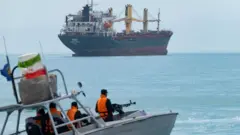
Recent developments have highlighted escalating tensions in the strategic Hormuz Strait, as Iran's Revolutionary Guard Navy seized two cargo ships. This action underscores Iran's assertive maritime posture, raising significant concerns for international shipping lanes critical to global energy supplies.
The New York Times reports that the seizure of these vessels by Iran, described as an act to reinforce its maritime claims, adds uncertainty to the already volatile US-Iran relations. The article suggests that the move could be a strategic calculation by Iran to gain leverage in negotiations over its nuclear program, thereby impacting international diplomatic efforts to stabilize the region.
In contrast, Sina focuses on the operational details, noting that the Iranian military personnel approached the ships with armed speedboats. The report emphasizes Iran's stance on maintaining order and security in the Hormuz Strait, which it considers a 'red line.' This narrative aligns with Iran's assertion of sovereignty and control over the critical maritime passage.
These developments indicate a potential disruption in global oil markets, as the Hormuz Strait is a pivotal conduit for oil shipments from the Middle East. Investors and businesses worldwide are likely to be affected, facing increased shipping costs and potential supply chain disruptions. Moreover, this situation could compel the US and EU to reassess their security commitments in the Gulf region, potentially leading to heightened military presence or diplomatic interventions.
The broader strategic implications involve a recalibration of alliances and security frameworks in the Middle East, with global powers needing to navigate the delicate balance between deterrence and diplomacy. For international readers, understanding these dynamics is crucial, as they have direct repercussions on energy prices, regional stability, and global geopolitical alignments.
Peru Halts F-16 Purchase: Strategic Implications for US-Peru Relations and Regional Stability
Recent developments in Peru highlight a significant shift in its defense procurement strategy, with potential wide-reaching implications for US-Peru relations and regional stability in Latin America. The decision by Peru's acting President Jose Maria Balcazar to temporarily halt the purchase of 24 US-made F-16 fighter jets, valued at $3.5 billion, has led to the resignation of both the Foreign Minister and the Defense Minister in protest, as reported by Liberty Times.
This move underscores a growing concern within Peru about the financial burden such a purchase would impose, particularly as the nation grapples with internal political instability and socio-economic challenges. The acting president has expressed a desire to leave the final decision to the incoming administration, citing the need to address pressing domestic issues like social inequality. This decision, covered by Sina, highlights the complex interplay between national defense priorities and economic realities.
From an international perspective, this development raises questions about the stability of US defense contracts in regions facing political volatility. For US defense contractors and the broader defense industry, such a halt could signal potential risks in future deals with countries experiencing similar internal challenges. Additionally, it might prompt a reassessment of strategic approaches in securing international defense agreements.
For the US and its allies, Peru's decision could impact geopolitical dynamics in Latin America, a region where great power competition is increasingly evident. The halt in the F-16 purchase might be perceived as a weakening of US influence, potentially opening avenues for other global powers to strengthen their foothold in the region. This could lead to a reevaluation of US foreign policy strategies in Latin America to maintain influence and support regional allies.
Overall, this situation serves as a reminder of the intricate balance between national defense strategies and economic constraints. It also emphasizes the importance for international markets and policymakers to monitor such developments closely, as they can have cascading effects on regional stability and global geopolitical alignments.
Massive Wildfire in Japan Forces Evacuations: Implications for Global Emergency Response and Environmental Policies
Recent reports from CCTV and Sina highlight a significant wildfire outbreak in Japan's Iwate Prefecture, particularly the town of Otsuchi, which has led to the evacuation of approximately 2,000 residents. The fire has already destroyed seven buildings, and efforts to control the blaze are ongoing. The cause of the fire is still under investigation.
These developments indicate a pressing need for enhanced international cooperation in emergency response strategies. With climate change contributing to more frequent and severe natural disasters, this event underscores the importance of global environmental policies aimed at mitigating such risks. For international markets and businesses, the incident serves as a reminder of the potential disruptions that natural disasters can cause to supply chains and economic activities.
For policymakers in the US, EU, and other regions, the wildfire may prompt a reevaluation of current environmental policies and emergency preparedness measures. The international community should consider increased collaboration on research and technology to improve early warning systems and firefighting capabilities.
Furthermore, this news highlights the broader strategic implications of climate-related disasters, which can impact geopolitical stability and international relations. As nations work to address these challenges, the importance of sustainable development and climate resilience becomes increasingly evident, making this a critical issue for readers worldwide to consider.
Iran's Protest Against US Use of Middle Eastern Airspace: Global Implications
Recent events highlight Iran's strong opposition to the United States' military activities in the Middle Eastern airspace. CCTV reports that Iran has formally protested the US utilization of the airspace over five Middle Eastern countries. This move underscores the ongoing geopolitical tensions in the region, potentially affecting international diplomatic relations and military strategies.
In another report by CCTV, Iran has addressed a letter to the United Nations, demanding accountability from the US and Israel for attacks on civilian infrastructure in the region. This indicates a growing concern over military engagements that could disrupt civilian life and essential services.
These developments indicate a potential escalation in regional tensions, which could have significant economic and strategic implications globally. For international markets, heightened tensions in the Middle East may influence oil prices and affect global supply chains. Businesses operating in or with connections to the region could face increased risks and uncertainty.
From a policy perspective, the US and EU may need to reassess their strategies in the Middle East, balancing military objectives with diplomatic efforts to maintain regional stability. For global readers, understanding these dynamics is crucial as they could influence international peace efforts and economic stability.
China's Push for Smart Agriculture: Implications for Global Food Security and Agri-Tech Markets
Recent developments in China's agricultural sector, as reported by CCTV News, highlight the country's strategic move towards integrating 'consumer livelihood with modern agriculture'. This initiative, described as a new 'track', emphasizes the transition towards 'remote-controlled' management systems in agriculture. This shift is crucial as it reflects China's broader goals of enhancing agricultural efficiency and sustainability through technological innovation.
Another report from CCTV News underscores the role of quality seeds, machinery, and practices in accelerating spring planting, with the vision of achieving a 'smart' harvest becoming a reality. This aligns with China's focus on agricultural modernization, aiming to bolster productivity and ensure food security.
These developments indicate a significant shift in China's agricultural policy, with potential repercussions for international markets and investors. As China invests in and adopts advanced agricultural technologies, global agri-tech markets may experience increased demand for innovative solutions and partnerships. For businesses and investors, this presents opportunities in sectors related to agri-tech, AI-driven farming solutions, and sustainable agriculture practices.
For the US, EU, and other regions, China's advancements in smart agriculture could influence global food security strategies and competitive dynamics in agri-tech innovation. Policymakers may need to consider how such technological integration could affect global supply chains and agricultural trade policies.
For international readers, understanding China's strategic focus on modernizing agriculture through technology is essential, as it not only shapes China's domestic food security but also impacts global agricultural practices, trade, and technology markets.
China-Cambodia Strategic Dialogue Highlights Regional Security and Global Implications
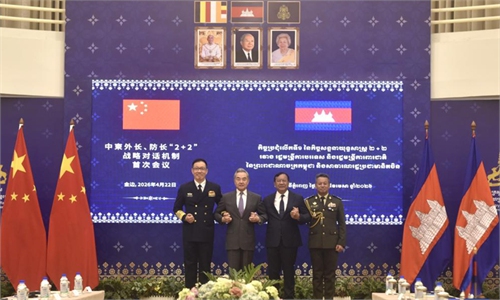
The recent "2+2" strategic dialogue meeting between China and Cambodia underscores the deepening bilateral ties and its broader implications for regional stability and international relations. The meeting, co-chaired by Chinese Foreign Minister Wang Yi and Defense Minister Dong Jun, alongside Cambodia's Deputy Prime Minister Prak Sokhonn and Defense Minister Tea Seiha, represents a significant step in strengthening military and diplomatic cooperation between the two nations. (Global Times)
This dialogue is a pivotal moment, reflecting China's strategic interest in Southeast Asia, which could shift regional power dynamics. For international markets and investors, this growing alliance may signal shifts in trade routes and investment flows, particularly in infrastructure and defense sectors. The United States and the European Union may need to recalibrate their policies in the region, considering China's expanding influence through such partnerships.
On the other hand, the Chinese Foreign Ministry's report on the 30th anniversary of agreements to enhance military trust in border areas with several countries, including Kazakhstan and Russia, further emphasizes China's commitment to regional stability through multilateral frameworks. This long-term strategy aims to build political trust and secure borders, which is crucial for regional peace and development. (Foreign Ministry of China)
These moves highlight China's strategic intent to create a stable regional environment, fostering economic growth and political alliances. For global audiences, especially policy experts in the US and EU, these developments indicate a need to understand China's growing influence in Asia and its implications for global security architecture.
Global Tech Competition Heats Up: AI, Quantum, and Space Exploration Drive Strategic Focus
The recent surge in technological advancements underscores a global race for leadership in fields like artificial intelligence (AI), quantum computing, and space exploration. This competition not only shapes the strategic priorities of nations but also has significant implications for international markets and policies.
Xinhua reports that countries are heavily investing in AI, with governments and tech giants pouring billions into enhancing computational capabilities. This trend is evident in the collaboration between Amazon and Anthropic, where Amazon is set to invest up to $250 billion, emphasizing the vital role of cloud infrastructure in AI development. Such investments are crucial for maintaining a competitive edge, highlighting the strategic importance of AI in future economic growth.
The news also highlights the burgeoning field of quantum computing, with projections suggesting the industry could surpass $800 billion by 2035. This growth is driven by advancements such as the collaboration between Osaka University and Fixstars in developing quantum circuits, which could revolutionize sectors reliant on high computational power. The geopolitical implications are significant, as nations vie for supremacy in this transformative technology, potentially reshaping global power dynamics.
Moreover, the article notes the expansion in the commercial space sector, with the global market expected to reach $1 trillion by 2026. This is exemplified by NASA's Artemis II mission and Amazon's acquisition of Globalstar, aimed at boosting satellite communications. Such developments are pivotal for enhancing global connectivity and have far-reaching implications for international communications infrastructure.
For international readers, these technological strides are not just about competition but also about collaboration, as nations seek to balance rivalry with cooperative innovation. The continuous investments in AI and quantum computing, coupled with the expansion of space exploration, are reshaping global economic landscapes. They present both opportunities and challenges for businesses and policymakers worldwide, necessitating strategic adaptations to leverage these technological advancements effectively.