US-China Summit Highlights Strategic Challenges; New Pharmaceutical and AI Regulations Reshape Global Trade and Ethics
U.S.-China Summit: Strategic Stability and Global Implications Amidst Economic and Political Tensions
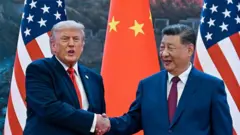
The recent summit between U.S. President Donald Trump and Chinese President Xi Jinping has garnered significant international attention, highlighting the intricate dynamics of U.S.-China relations. The New York Times emphasized the differing body languages and rhetorical styles of the two leaders, indicating underlying tensions despite a facade of diplomacy. This nuanced portrayal suggests a balancing act between confrontation and cooperation, with implications for global trade and geopolitical stability.
Meanwhile, Xinhua reported on the summit's achievements, highlighting a 'constructive China-U.S. relationship of strategic stability.' This narrative underscores China's intent to project an image of diplomacy and peace, aiming to reassure international markets and investors of steady bilateral ties. Such developments could ease tensions in global supply chains, especially for industries heavily reliant on Sino-American trade.
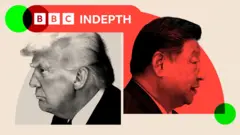
The BBC provided a more skeptical view, noting the lack of substantial economic agreements despite the presence of major American business leaders like Elon Musk and Jensen Huang. This reflects ongoing challenges in achieving trade breakthroughs, which can affect investor confidence and market volatility. The absence of new trade deals underscores the complexities of U.S.-China economic relations amidst technological competition and mutual dependency.
In contrast, Liberty Times focused on the symbolic and strategic nature of the meeting location in the South China Sea, hinting at underlying military and territorial tensions. This highlights the geopolitical stakes involved, especially for regional actors concerned about maritime security and freedom of navigation.
Sina reported Trump's praise for the Chinese military, possibly as a diplomatic gesture to ease military tensions. Such acknowledgments could influence U.S. defense policy and military posturing in the Asia-Pacific region.
The Global Times echoed a positive outlook, emphasizing enhanced mutual understanding and cooperation. This aligns with China's strategic narrative of promoting global peace and prosperity, aiming to position itself as a stabilizing force in international affairs.
Overall, these developments are crucial for international markets and policymakers. The summit's outcomes—or lack thereof—will influence trade policies, investment strategies, and geopolitical alignments. Investors and businesses must navigate these complexities, balancing risks and opportunities in a landscape shaped by great power competition and economic interdependence.
China's New Pharmaceutical Representative Regulations: Implications for Global Business and Policy
Recent developments in China's pharmaceutical sector have drawn significant attention, particularly with the release of new regulations concerning the management of pharmaceutical representatives. The CCTV and Sina articles both report on the National Medical Products Administration's joint issuance of the 'Measures for the Administration of Pharmaceutical Representatives' alongside seven other departments.
The regulations are aimed at standardizing academic promotion activities by pharmaceutical representatives, enhancing their management, correcting industry practices, and purifying the industry's atmosphere. The CCTV report focuses on the collaborative effort between various state departments, including the Ministry of Public Security and the National Health Commission, underscoring a government-wide initiative to enforce these new rules.
Sina's coverage adds further context by stating that the new measures build upon existing trial regulations, ensuring continuity and effectiveness in pharmaceutical representative registration. This piece highlights the procedural aspects of the regulation, such as the requirement for representatives to meet specific qualifications and adhere to the 'Measures for the Administration of Pharmaceutical Representatives'.
For international markets and investors, these developments indicate a tightening of regulations in China's pharmaceutical sector, which could lead to changes in how international companies engage with the Chinese market. Companies may need to adjust their compliance strategies and ensure their staff are well-trained to meet these new standards. The move could also impact global supply chains, as stricter regulations might affect the pace and nature of pharmaceutical trade with China.
For policymakers in the US, EU, and other regions, China's regulatory shift might prompt a re-evaluation of their own pharmaceutical industry standards and practices, especially in terms of ethical promotion and representative conduct. This could lead to increased scrutiny and possibly inspire similar regulatory reforms elsewhere.
Overall, these regulatory changes highlight China's commitment to refining its pharmaceutical sector, with potential ripple effects on global business operations, trade practices, and regulatory policies.
China's Ambitious 'Strong and Prosperous Jiangsu' Initiative: Implications for Global Trade and Investment
The recent announcement from CCTV about the development plan for Jiangsu province, titled 'Strong and Prosperous Jiangsu', underlines a significant push towards economic growth and technological advancement within China. As part of the '15th Five-Year Plan', this initiative highlights Jiangsu's role as a critical hub for innovation and industrial development.
This development has far-reaching implications for international markets and investors. Jiangsu's strategic focus on enhancing industries such as technology and manufacturing could attract foreign investments, offering new opportunities for global companies looking to tap into China's vast market. The emphasis on creating a 'strong and prosperous' region suggests potential shifts in supply chain dynamics, as Jiangsu could become a pivotal point for production and distribution networks.
For policymakers in the US, EU, and other regions, understanding Jiangsu's development trajectory is crucial. As Jiangsu strengthens its economic capabilities, there may be increased competition in sectors like electronics and machinery, impacting global trade balances. Moreover, the province's advancements could lead to enhanced export capabilities, challenging existing trade policies and necessitating strategic adjustments.
International readers should pay attention to this initiative as it reflects China's broader economic strategies, which prioritize technological self-sufficiency and regional development. Jiangsu's growth could influence global economic patterns, affecting everything from commodity prices to international labor markets. The broader strategic implications include potential shifts in geopolitical alliances as countries reassess their economic engagements with China.
China's AI Ethics Initiative: Global Implications for Technology Governance
Recent developments in China's approach to artificial intelligence (AI) ethics highlight the country's strategic focus on establishing a comprehensive framework for AI technology governance. An announcement from the Ministry of Industry and Information Technology, as reported by Xinhua, details the launch of a pilot plan aimed at exploring ethical reviews and services in AI technology. This initiative is set to be implemented in various cities within provinces that are designated as national AI innovation application pilot zones.
This move by China underscores its commitment to address the ethical challenges posed by rapid advancements in AI technologies, such as algorithmic bias and emotional dependency. The establishment of a governance system that involves multiple stakeholders aims to ensure responsible innovation and high-quality industrial development. For international markets, businesses, and investors, this signals China's proactive stance in setting AI standards, which could influence global norms and practices for AI ethics and governance.
The implications for U.S., EU, and other regional policies are significant. As China builds its AI governance infrastructure, it presents a model that could either align with or diverge from Western approaches to AI ethics. This divergence or convergence will impact international collaborations, regulatory harmonization, and competitive dynamics in the technology sector. For instance, companies operating in both Chinese and Western markets may need to navigate differing regulatory landscapes, affecting their compliance strategies and innovation trajectories.
Readers outside China should pay attention to these developments as they may redefine the rules of engagement in AI technology globally. The pilot plan's focus on creating a network for AI ethical risk monitoring and establishing a database of AI ethics risk cases suggests a methodical approach that could set precedents for international AI governance.
Strategically, China's initiative also positions it as a leader in the global conversation on AI ethics, potentially influencing the direction of future international agreements and collaborations. As China moves forward with this plan, its outcomes will likely shape the competitive landscape of AI innovation and governance, with far-reaching effects on global technology ecosystems.