US-Iran Tensions Escalate; Afghan Earthquake Highlights Regional Vulnerability; China's Political Shifts Signal Global Market Impact

US-Iran Military Incident Escalates Tensions Amid Diplomatic Stalemate
Recent events in the Middle East have highlighted a significant escalation in tensions between the United States and Iran. On April 3rd, two US military aircraft were shot down over Iran, marking a severe incident in the ongoing geopolitical struggle. This development is reported by various international news outlets, each offering a unique narrative and perspective on the unfolding situation.
According to Sina News, the incident involved two American aircraft, an F-15E fighter jet and an A-10 attack plane, being downed by Iranian forces near the Hormuz Strait. The report emphasizes the strategic significance of the location, suggesting that Iran's actions are a demonstration of its military capabilities and resolve in the face of foreign military presence. The outlet provides vivid descriptions and imagery from Iranian state media showing the aircraft being hit by anti-aircraft missiles, which underscores the seriousness of the encounter.
In contrast, Liberty Times focuses on the diplomatic implications, quoting US President Donald Trump stating that the incident will not affect ongoing negotiations with Iran. The publication frames this as a typical wartime occurrence, reflecting a more stoic approach from the US administration. This perspective suggests a desire to downplay the incident's impact on broader diplomatic efforts, possibly to maintain a semblance of control and stability in the region.
World Journal highlights Iran's aggressive military response to a US proposal for a 48-hour ceasefire, which was reportedly rejected by Tehran. This narrative portrays Iran as unwilling to engage in diplomatic solutions, choosing instead to escalate militarily. The report suggests a broader strategic pattern where Iran is asserting its dominance in the region, potentially complicating US and allied efforts to negotiate peace.
Another report from Sina News discusses the international ramifications, noting that the incident has triggered a series of diplomatic maneuvers involving regional players like Turkey and Egypt, who are attempting to mediate and prevent further escalation. This highlights the complex web of alliances and conflicts in the Middle East, where actions by major powers can have ripple effects across the region.
The implications for international markets and policies are significant. The incident has the potential to disrupt global oil supply routes through the Strait of Hormuz, causing fluctuations in oil prices and impacting economies worldwide, particularly in energy-dependent regions like the EU and Asia-Pacific. For investors, this adds a layer of geopolitical risk that could affect portfolios and strategic decisions.
Strategically, this development underscores the fragile state of US-Iran relations and the broader US policy in the Middle East. For the EU and other allies, it presents a challenge in balancing support for US policies with diplomatic engagement with Iran. The situation also poses a test for international diplomatic frameworks aimed at conflict resolution in volatile regions.
Afghanistan Earthquake: Global Implications of Seismic Vulnerability in South Asia
Recent reports highlight the devastating impact of a magnitude 5.9 earthquake that struck Afghanistan's Hindu Kush region. According to Liberty Times, the earthquake resulted in the collapse of a building in Kabul, leading to eight fatalities and injuring a child. The tremors were felt across neighboring countries, including Pakistan's Islamabad and India's New Delhi. This underscores the seismic vulnerability of South Asia, a region characterized by complex geopolitical dynamics.
The World Journal confirms the earthquake's impact, noting the significant depth of 177 kilometers as reported by the German Research Centre for Geosciences. Despite the depth, the earthquake's effects were widely felt, indicating potential weaknesses in regional infrastructure that could have broader implications for international investors and aid organizations targeting development in these areas.
Sina News also reports on the earthquake, highlighting the Afghan government's response and the resulting casualties. The consistent reporting across these sources points to a critical need for enhanced disaster preparedness and response strategies in Afghanistan and its neighboring regions. This is particularly relevant for international NGOs, investors, and governments engaged in humanitarian and development work.
For international markets and policymakers, these reports emphasize the importance of stability in Afghanistan, not just for regional security but also for economic considerations. The earthquake serves as a reminder of the ongoing challenges in infrastructure and governance that can impact foreign investments and regional trade routes, particularly as South Asia continues to emerge as a critical node in global supply chains.
China's Qingming Festival Highlights National Security and Safety Precautions Amidst Global Implications
As the Qingming Festival approaches, recent articles from CCTV News emphasize the importance of national security and safety precautions for citizens participating in traditional activities. The festival, known for honoring ancestors and enjoying outdoor activities, is a significant cultural event in China, but it also presents opportunities to reinforce security measures.
The primary focus of the articles is to remind the public of the importance of maintaining security awareness while engaging in Qingming activities. This reflects China's broader emphasis on national security, which has implications beyond its borders. For international markets and businesses, this increased attention to security may signal stricter regulatory environments and potential disruptions in areas such as technology and data management, as China continues to prioritize its domestic stability and security.
Furthermore, the emphasis on safety precautions during public events highlights China's approach to managing large gatherings, which can be relevant for international event organizers and businesses planning to engage with Chinese markets or consumers. The articles serve as a reminder that understanding China's domestic priorities, such as security during cultural events, can offer insights into its broader policy directions.
The global relevance lies in how these domestic narratives shape China's foreign policy and international relations. As China underscores national security in various aspects of life, it may influence its interactions with other nations, especially in areas like cybersecurity and international trade regulations. For policymakers in the US, EU, and other regions, these developments could necessitate adjustments in diplomatic and economic strategies to align with China's security-focused stance.
Unprecedented Scoring Records in German Football: International Implications and Market Dynamics
Recent developments in German football have captured significant attention, not only for their sporting excellence but also for their broader implications on international markets and sports economics. Sina reports that Bayern Munich is on the cusp of breaking its single-season scoring record, needing just five more goals to surpass the historic record of 101 goals set in the 1971-72 season. This highlights Bayern's dominance in the Bundesliga, a factor that could influence the global football market, affecting player transfers, sponsorships, and broadcasting rights.
Meanwhile, another Sina article details a thrilling match where C. Ronaldo's involvement led to a 5-2 victory for his team, further emphasizing the high-scoring trend in recent matches. Such performances by international stars can significantly impact their market value and attract attention from clubs worldwide, possibly altering transfer market dynamics.
These articles collectively underscore how the Bundesliga's evolving competitive landscape might influence international business and investment in sports. For investors and market analysts, the increasing scoring rates could signal a shift towards more aggressive and entertaining styles of play, potentially increasing viewership and engagement globally. This could lead to renegotiated broadcasting deals and increased merchandise sales, impacting revenue streams for clubs and associated businesses.
For policymakers in the US, EU, and other regions, the emphasis on high-scoring games might necessitate a re-evaluation of sports-related economic strategies, including investment in sports infrastructure and youth development programs to nurture similar talents domestically. Furthermore, the global appeal of such high-profile matches could enhance cultural exchange and soft power, strengthening international relations through sports diplomacy.
Xi Jinping's Political Maneuvering: Implications of Ma Xingrui's Investigation for Global Markets and Politics
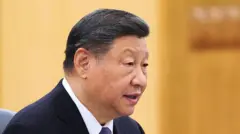
Recent developments in China have brought to light the political downfall of Ma Xingrui, a member of the Communist Party's Central Political Bureau, as reported by Liberty Times. This incident is not merely a case of anti-corruption; it signals a deeper power restructuring within China's political landscape, according to Japanese media commentator Nobuo Tabata.
Ma Xingrui, who previously managed the sensitive Xinjiang region, is under investigation for alleged severe disciplinary and legal violations. This move indicates a significant shift in China's approach to governance, where previously untouchable figures in sensitive regions like Xinjiang are now being scrutinized. This suggests a break from the past practice of protecting officials with deep ties to strategic regions, potentially destabilizing local governance structures.
For international markets and businesses, this development raises concerns about the predictability of China's political environment. The ongoing purges reflect an internal instability that could affect China's economic policies and regional stability, impacting global supply chains and investment climates. Investors should be aware of the potential for increased volatility in China's policy-making, which may influence global markets.
From a geopolitical perspective, this internal political shift in China might affect its foreign policy decisions. As Xi Jinping consolidates power, there could be a shift in China's approach to international diplomacy, potentially leading to more assertive or unpredictable actions on the global stage. This necessitates careful monitoring by the US, EU, and other regional powers, as China's internal dynamics often have broader strategic implications.
Overall, the investigation into Ma Xingrui is a microcosm of the broader power struggles within China’s political elite, highlighting the fragility of internal alliances and the potential for significant policy shifts. This is a critical development for global audiences, as it underscores the need to understand China's domestic political maneuvers and their international ramifications.