
US-Iran Tensions Escalate; Indonesia's Seismic Risks; Artemis II Launches; Gold and Oil Markets React; China Seeks Diplomatic and AI Leadership
US-Iran Tensions Escalate as Trump Threatens Military Action: Global Implications
Recent developments indicate a significant escalation in US-Iran tensions following US President Trump's pronouncements and Iran's subsequent military response. According to Sina, shortly after Trump claimed that the US had decimated Iran's missile systems, Iran launched missiles towards Israel. This highlights the immediate volatility in the region and raises concerns about broader regional stability.
Trump's aggressive rhetoric, suggesting potential attacks on Iranian power plants if no agreement is reached, as reported by Sina, underscores the high stakes involved. This not only impacts the Middle East but also has significant implications for global oil markets and energy security. Investors and businesses worldwide should be alert to potential disruptions in oil supply and price fluctuations.
The New York Times reports Trump's assertion that the US will wrap up its military engagement in Iran within two to three weeks. This timeline suggests a potential shift in US military strategy and could influence US foreign policy priorities, affecting alliances and regional power dynamics.
Meanwhile, Sina and Sina highlight Trump's remarks that the US is close to achieving its core strategic objectives in Iran. This could imply a nearing conclusion to specific military goals, which might result in a recalibration of military resources and influence geopolitical alignments, especially concerning US-EU relations and NATO's strategic interests.
The Israeli media, as cited by Sina, expresses concern over the US potentially declaring the military action against Iran as complete without clear negotiation outcomes. This reflects regional apprehensions about the sustainability of peace and the potential for renewed conflict, which could affect international diplomatic efforts and lead to shifts in defense policies among US allies.
The Iranian Foreign Ministry's statement, as reported by CCTV, that Iran is prepared for any attack, indicates a readiness for prolonged confrontation, emphasizing the need for diplomatic interventions to prevent further escalation. This situation presents a critical juncture for international diplomacy, with potential ripple effects on global security frameworks.
Overall, these developments are pivotal for international markets, particularly in energy and defense sectors, and will likely influence foreign policy strategies in the US, EU, and beyond. The situation demands close monitoring by global stakeholders to anticipate and mitigate potential economic and geopolitical impacts.
Seismic Events in Indonesia's North Maluku: Implications for Regional Stability and Global Markets
Recent seismic activity in Indonesia's North Maluku region has captured international attention due to its potential implications for regional stability and global markets. On April 2, a significant 7.6 magnitude earthquake struck near North Maluku, as reported by Xinhua. This event tragically resulted in the loss of one life and prompted tsunami warnings, highlighting the region's vulnerability to natural disasters.
Sina provides additional context by reporting a smaller 5.8 magnitude quake in the same area, underscoring the region's seismic activity. While this particular event did not cause significant damage, it serves as a reminder of the geological volatility in the region.
The Xinhua article elaborates on the immediate response, noting that local authorities issued tsunami warnings and encouraged coastal evacuations to mitigate potential risks. This proactive stance is crucial for minimizing casualties and economic impact, particularly in a region where infrastructure resilience is critical.
The CCTV report offers less detail but confirms the occurrence of the earthquake, reinforcing the attention this event has garnered across multiple news outlets.
For international markets and businesses, these developments indicate potential disruptions in regional supply chains, particularly those reliant on maritime routes through the Indonesian archipelago. The increased seismic activity could lead to heightened insurance premiums and necessitate contingency planning for firms operating in or through Southeast Asia.
From a policy perspective, the US, EU, and other regional powers may need to reassess their disaster response collaborations with Indonesia, ensuring that humanitarian aid and technical support can be swiftly mobilized in future crises. Additionally, these events could influence ASEAN's regional stability efforts, as member states prioritize disaster risk reduction and infrastructure resilience.
Readers outside China should be aware of these developments, as they reflect broader strategic and economic implications, including the potential for increased volatility in global supply chains and the necessity for robust international cooperation in disaster preparedness and response.
Artemis II Launch Marks US Return to Manned Moon Missions with Global Implications
The recent launch of NASA's Artemis II mission signifies a pivotal moment in space exploration, as it marks the United States' return to manned lunar missions after more than five decades. This ambitious project, as reported by multiple sources, including New York Times and Xinhua, aims to test critical technologies for future deep space exploration.
The New York Times highlights the historical significance of this launch, emphasizing its role in rekindling human exploration of the Moon. The mission involves sending four astronauts into lunar orbit, a first since the Apollo program ended in 1972. This narrative underscores the technological advancements and international collaborations that make this mission possible, reflecting a renewed era of space exploration that could inspire global interest and investment in space technologies.
In contrast, Xinhua offers a more technical account, detailing the mission's objectives and the sophisticated systems being tested. The focus here is on the Space Launch System rocket and the Orion spacecraft, which are central to NASA's strategy for future manned missions beyond low Earth orbit. The report emphasizes the mission's role in validating technologies that will support longer-term lunar exploration and potential Mars missions, highlighting the strategic importance of maintaining technological leadership in space.
Both articles agree on the Artemis II mission's potential to bolster international partnerships and stimulate economic opportunities in the aerospace sector. The mission's success could lead to increased investments in space exploration, affecting global markets and encouraging international cooperation. For the US and its allies, this mission reaffirms leadership in space exploration, a critical strategic domain in the 21st century.
The broader implications of this mission are significant for international markets and policymakers. The successful implementation of Artemis II could catalyze developments in related industries, from aerospace manufacturing to advanced materials and AI-driven navigation systems. Furthermore, it underscores the growing importance of space as a domain of geopolitical competition, where technological prowess translates into strategic advantages.
For global readers, understanding the ramifications of Artemis II is crucial. The mission not only sets the stage for future lunar exploration but also influences global power dynamics, particularly in the context of US-China technological rivalry. As nations vie for leadership in space, the outcomes of such missions will shape international collaborations, economic policies, and security considerations.
Global Gold and Silver Prices Plummet Amid US-Iran Tensions
Recent developments indicate significant volatility in global commodity markets, particularly affecting gold and silver prices. According to Liberty Times, US President's announcement regarding intensified military actions against Iran led to a sharp decline in global financial markets. Gold prices experienced a dramatic drop, falling over 3% to approximately $4,650 per ounce, with experts warning of potential further declines to $3,800. The announcement also led to a downturn in Asian stock markets, with notable indices like Japan's Nikkei and South Korea's KOSPI experiencing significant losses.
Meanwhile, Sina reported that both gold and silver experienced substantial declines, with silver dropping over 3% to $72.48 per ounce. This underscores the broader impact of geopolitical tensions on commodity prices.
For international markets, this volatility signals potential risks for investors and businesses reliant on stable commodity prices. The sharp movements in gold and silver prices reflect broader concerns about geopolitical instability and its impact on global economic conditions. For policymakers in the US and EU, these price shifts may necessitate reassessments of economic forecasts and monetary policies, particularly if tensions further escalate.
Readers outside China should pay attention to these developments as they illustrate how geopolitical tensions can swiftly impact global markets, affecting investment portfolios and economic strategies. The broader strategic implication is the demonstration of how geopolitical events, particularly those involving major powers like the US and Iran, can swiftly ripple through international markets, necessitating agile responses from investors and policymakers alike.
Rising Brent Crude Prices Signal Global Economic Uncertainty Amid US Policy Concerns
Recent reports from Chinese media outlets Xinhua and Sina highlight a significant increase in Brent crude oil prices, with fluctuations exceeding 4% in a single trading session. Xinhua attributes this surge to ongoing market anxieties that remain unresolved by recent remarks from US President Trump. The price of Brent crude reached $105.7 per barrel, reflecting these concerns.
Sina corroborates this trend, noting that on the same day, WTI crude oil prices also surged past $103 per barrel, marking a 4.07% increase. Brent crude similarly saw a rise of $4, reaching a price of $102.86 per barrel, representing a 4.06% increase.
The news highlights the ongoing volatility in the global oil markets, driven by geopolitical uncertainties and US economic policies. For international markets, this price hike could lead to increased costs for transportation and manufacturing, thereby affecting global supply chains and consumer prices. Investors should be wary of the potential inflationary pressures that such oil price volatility may impose on the global economy.
These developments indicate a broader strategic implication, especially for countries dependent on oil imports. As the EU and other regions navigate their energy policies, the rising oil prices could complicate efforts to transition to more sustainable energy sources. Furthermore, US policy decisions under President Trump, particularly in relation to energy and foreign policy, continue to exert significant influence on global economic stability, underscoring the interconnected nature of international markets.
China's Diplomatic Moves in Iran Conflict and AI Leadership: Global Implications
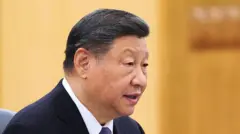
As the conflict in the Middle East enters its second month, the global energy supply faces significant strain, with oil prices surging. China has stepped into the fray, positioning itself as a peacemaker in the ongoing Iran conflict. According to BBC, China has joined forces with Pakistan in a surprising diplomatic role, proposing a five-point plan aimed at facilitating a ceasefire and reopening vital waterways like the Hormuz Strait. This move is particularly noteworthy as it comes ahead of crucial trade talks between Chinese President Xi Jinping and U.S. President Donald Trump, hinting at China's strategic intentions to assert its influence in international diplomacy.
China's involvement in the Iran conflict, as outlined by BBC, is seen as an attempt to stabilize the global economy, which is crucial for China due to its heavy reliance on global exports to boost its domestic economy. The potential prolonged conflict threatens to impact China's position as the "world's factory," affecting industries from toy manufacturing to semiconductor production. This geopolitical maneuvering could influence global supply chains, causing international markets and businesses to reassess their strategies in response to China's diplomatic actions.
Meanwhile, Xinhua highlights China's leadership in the field of artificial intelligence (AI), asserting that China is at the forefront of AI development. Liu Dongmei, Party Secretary of the Chinese Academy of Science and Technology Development Strategy, emphasized China's position as a leader in AI, which is crucial for maintaining its competitive edge in the global tech race. This development holds significant implications for international tech competition, potentially influencing regulatory frameworks and innovation ecosystems across the globe.
The BBC analysis suggests that China's diplomatic engagement in the Iran conflict is not just about securing energy interests but also about enhancing its global standing by playing a pivotal role in peace negotiations. However, the credibility of China's role as a neutral broker is questioned due to its close ties with Russia and its assertive policies in regions like Hong Kong and Taiwan.
In contrast, Xinhua's focus on AI underscores China's ambition to be a technological leader, a position that could challenge the dominance of Western tech giants and reshape global tech dynamics. This could lead to increased scrutiny and potential policy shifts in the US, EU, and other regions as they navigate the implications of China's technological advancements and diplomatic strategies.