China's Strategic Alliances Deepen; US-Iran Nuclear Tensions; Shenzhen's Cultural Ascent
China's Strategic Moves: Deepening Triangular Alliances and Global Impact
Recent developments in China’s diplomatic activities highlight a strategic pivot towards strengthening alliances with Russia and North Korea, raising significant implications for global geopolitics and economic landscapes. The Liberty Times reports on Chinese President Xi Jinping's potential visit to North Korea, which marks a notable step in solidifying a triangular bloc involving China, Russia, and North Korea. This alliance could challenge U.S. influence in the region, particularly as America grapples with its global leadership role amid the ongoing Ukraine conflict.
The Liberty Times further emphasizes the historical significance of Xi's visit, potentially revitalizing the 'China-North Korea Treaty of Friendship, Cooperation and Mutual Assistance' on its 65th anniversary. This treaty has provisions for military support in case of an attack, indicating a deeper military collaboration that could destabilize the balance of power in Northeast Asia. For international markets and investors, this could mean increased volatility and a recalibration of risk assessments concerning Asian markets.
Meanwhile, the New York Times provides a broader context by exploring the economic repercussions of China's growing influence. It highlights the challenges faced by multinational corporations operating in China, amid rising geopolitical tensions and regulatory pressures. This situation forces businesses to reconsider their supply chains and investment strategies, potentially leading to shifts in global trade patterns and increased scrutiny from Western governments.
On a related note, the Sina article covers South Korean President Yoon Suk-yeol's criticism of fake news, particularly those sowing anti-Chinese sentiment. This reflects the delicate balance regional leaders must maintain between domestic media narratives and international diplomacy, a dynamic that could influence public perception and policy-making in the Asia-Pacific region.
In Europe, the World Journal reports on the European Union's potential easing of sanctions on a Chinese semiconductor company, Yangtze Memory Technologies, to alleviate automotive supply chain pressures. This decision underscores the complex interplay between geopolitical strategies and economic necessities, as European industries face critical supply shortages. The move could signal a temporary shift in EU-China trade relations, affecting U.S. and EU policy alignments regarding technology transfers and economic sanctions.
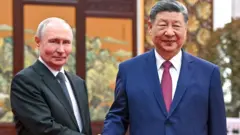
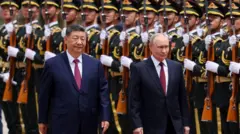
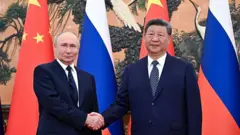
Finally, CCTV and CCTV highlight the evolving Sino-Russian relations, with both nations committing to deeper strategic cooperation. This development is significant for maintaining global strategic stability and could influence multilateral platforms like the United Nations and Shanghai Cooperation Organization. For international readers, this signals a potential reorientation of global alliances, with China and Russia positioning themselves as key players in shaping a multipolar world order.
Explosion at US Air Force Base Highlights Safety Concerns Amid Global Military Tensions
Recent reports from CCTV and Sina have highlighted an incident at a US Air Force base in Florida, where an explosion in a high-explosive research facility led to injuries of two personnel. While the CCTV article provides a brief mention of the incident, it primarily focuses on the general ownership and rights associated with its content, offering little substantive detail. In contrast, Sina's report delves deeper into the specifics, noting that the explosion occurred in the afternoon and that the injuries were confined to the facility. The injured were promptly taken to a local hospital for treatment, and the cause of the accident is currently under investigation.
From a global perspective, this incident underscores the inherent risks associated with military research and development activities, particularly in high-stakes environments. For international markets and businesses, such incidents may raise concerns over the safety protocols and risk management strategies employed in military and defense sectors, potentially influencing investor confidence in defense contractors and related industries. Furthermore, as the US continues to maintain a significant military presence globally, any disruptions or safety concerns at its bases could have implications for its operational readiness and strategic positioning.
For US and EU policymakers, this incident might serve as a prompt to review and possibly tighten safety regulations within military research facilities, ensuring that such accidents do not compromise broader national security objectives. Meanwhile, readers outside China should be cognizant of the broader strategic implications, as any perceived vulnerabilities in US military infrastructure could be leveraged in geopolitical narratives, influencing international relations and defense policies.
US-Iran Tensions Over Uranium Enrichment Highlight Global Nuclear Concerns
Recent developments in the geopolitical landscape highlight a renewed focus on Iran's nuclear capabilities, particularly concerning its uranium enrichment program. According to CCTV, the Iranian Foreign Ministry asserts Iran's inherent right to peaceful nuclear development, emphasizing sovereignty over its nuclear resources. This narrative underscores Iran's steadfast position against external pressures, notably from the United States, to alter its nuclear trajectory.
Meanwhile, a report from Sina reveals ongoing tensions as the U.S. demands Iran hand over its enriched uranium, with President Trump stating that the U.S. might destroy the material if obtained. This highlights the U.S. strategy of exerting pressure to limit Iran's nuclear potential, reflecting broader concerns over nuclear proliferation and regional security.
The reports collectively demonstrate a divergence in narrative, with Chinese media focusing on Iran's rights and autonomy, while U.S. sources emphasize strategic containment. These developments signal potential impacts on international markets, particularly in the energy sector, as geopolitical tensions can influence oil prices and global supply chains.
For international policymakers, these events stress the need for diplomatic engagement and multilateral dialogue to address nuclear non-proliferation. The EU, for instance, may find itself in a mediating role, balancing relations with both the U.S. and Iran to maintain regional stability.
Overall, the global strategic implications are significant. A misstep in handling Iran's nuclear program could lead to a broader conflict, affecting not just regional players but also global economic and security frameworks. This situation calls for a careful, coordinated approach among international stakeholders to mitigate risks and ensure a peaceful resolution.
Shenzhen's Cultural Ambitions: A Rising Global Player in China's Creative Economy
The recent article from Tencent News highlights Shenzhen's emergence as a major cultural hub in China, challenging the traditional perceptions of it being merely a technological and manufacturing center. This development is significant on multiple fronts, especially as it aligns with China's broader strategy to enhance its cultural and soft power on the global stage.
Shenzhen's role as a host for the 22nd National Cultural Expo underscores its growing influence. This event, coinciding with the APEC meetings, positions Shenzhen as a key player in cultural exchanges and international trade discussions. The city, historically known for its economic reforms and manufacturing prowess, is now leveraging its innovative spirit to foster cultural industries, integrating technology and culture to boost its global standing.
Internationally, this shift indicates that China is not only focusing on hard power but is also investing heavily in soft power through cultural exports. For businesses and investors, Shenzhen's cultural expansion offers new opportunities in creative industries, digital content, and intellectual property. This could influence global supply chains, as demand for Chinese cultural products increases.
The article points out that Shenzhen's cultural industries have seen substantial growth, with revenues reaching 1.52 trillion yuan, marking a 16.6% increase. This growth is driven by sectors such as online gaming, digital content, and cultural technology, which are increasingly relevant to international markets. Shenzhen's success in these areas could prompt other global cities to adopt similar strategies, fostering a more integrated global cultural economy.
For policymakers, especially in the US and EU, Shenzhen's model presents both challenges and opportunities. There may be increased competition in cultural exports, requiring a reevaluation of cultural trade policies. Additionally, Shenzhen's success in merging technology with culture could inspire similar initiatives in other countries, emphasizing the need for international collaboration in technology and cultural policy.
Overall, Shenzhen's cultural rise is a testament to China's strategic pivot towards a more balanced global influence, combining economic might with cultural outreach. This development has implications for global cultural dynamics, trade negotiations, and the strategic positioning of countries in the international cultural arena.